
Got a call from a friend the other day, asking for advice on joining an advisory board.
The company was dangling stock options like candy, promising high growth and a glowing future.
But they only offered a one-time payment, expecting an ongoing commitment.
My first thought? This deal needs some serious fine-tuning.

And when I dug further, it was clear that the person being recruited, was going to be expected to connect these guys with every investor relationship the founders wanted for an upcoming round.
Basically, run the capital raise for free.
Why Advisory Boards Are a Slippery Slope
Unfortunately, too many “advisors” see shiny perks & a title and jump in, only to realize later they’re locked into a gig with a flimsy compensation structure.
Most advisory board roles don’t add up to what they're hyped to be. So, what’s the problem?
Why Many Advisors Struggle with Advisory Roles
- One-time fees for ongoing work make zero sense.
- Low pay for high stakes—they want you to act, but the price is wrong.
- Loose expectations—you’re left guessing what’s actually required.
- Stock options with no liquidity—shares that may never turn into cash.
- Risk without control—you have no real influence on company outcomes.
Advisors often dive into these roles with good intentions, thinking they’re getting a stake in the next big thing.
But without clear expectations and ongoing compensation, the only one benefiting is the company.
So, let’s break down some actionable steps to help you avoid these traps.
Step 1: Insist on Fair Compensation
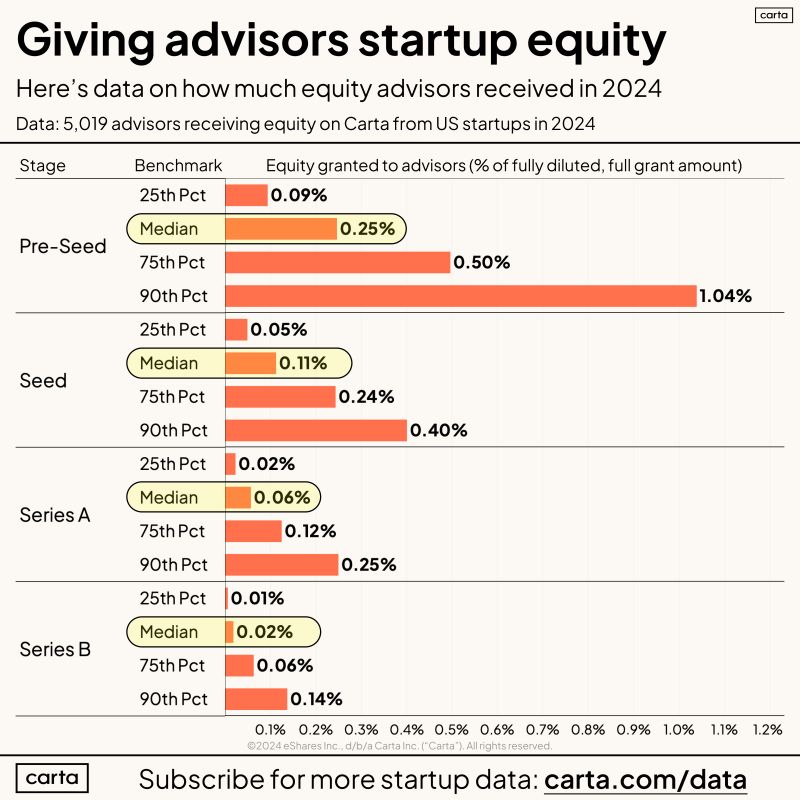
Imagine signing up for an advisory board role expecting big things, only to find out the “comp” is a glorified thank-you note.
In a healthy advisory relationship, time and expertise are compensated in real dollars, not just shares.
- Set your baseline—Start at $3-5K per month as a fair range for your advisory expertise.
- Avoid one-off payments for ongoing roles—Monthly commitment deserves monthly compensation, simple as that.
- Think “real dollars” first, shares second—If the company only wants to pay in shares, evaluate those shares skeptically. Ask yourself, would I write a check from my own bank account, to invest in this company? If not, keep walking.
Step 2: Define Your Scope and Control Your Time
The company might see you as an “on-call” advisor, expecting you to weigh in on every product update, investor pitch, and strategy pivot.
I’ve seen it happen.
To them, your time might seem endless, but you’re balancing priorities. Don’t let them drain your time.
- Define your commitment—clarify upfront if you’re expected at monthly or quarterly check-ins.
- Set limits on scope—advisory work isn’t an “everything” role. Stick to what you know best and set boundaries around it. Enforce them.
- Be wary of media requirements—if they want you to do public appearances or PR, that’s a separate role. Price it accordingly.
Step 3: Question Their Expectations and Valuation
Every advisory board pitch comes with big promises. Exponential growth.
A slice of the pie when they IPO. But promises don’t pay the bills, and valuations can be fluffier than a marshmallow.
- Ask why they need you—Are they looking for expertise in product, marketing, or investor relations? If they need you to succeed, that’s a red flag. Advisors shouldn’t be the linchpin of growth; they should enhance it.
- Challenge their valuation—If their valuation sounds too good to be true, it might be. Make sure you’re not building your compensation expectations on an overblown number.
- Question their investor track record—If they haven’t raised meaningful capital from serious outside investors, consider why. Advisory board roles should complement growth, not be the company’s lifeline.
Step 4: Focus on What You’re Giving Up vs. What You’re Gaining
Many companies hope advisors will accept the “future potential” of shares as payment.
But without an exit strategy or clear liquidity path, 10% of nothing is still nothing.
- Look for ongoing compensation—Equity is great, but only if paired with cash or other tangible benefits.
- Set vesting and lockup terms you control—If shares are part of the deal, make sure they vest in a way that’s favorable to you, not something that will hold you hostage to their timeline.
- Ensure your stake aligns with your effort—Calculate the actual hours and opportunity costs of advisory work. If the stake isn’t worth it, don’t be afraid to walk away.
Advisory board roles should feel like partnerships, not charity work.
Protect your time, negotiate for value, and only accept roles that reward your expertise both now and in the future.
A solid advisory position compensates with cash, shares, and clear boundaries, not vague promises and undervalued equity.
Stepping onto an advisory board is a commitment, but it’s also an investment in yourself.
So be bold, question everything, and remember—you’re not there to make them successful; you’re there to enhance the journey.
There are 4 ways I can help you:
02. Deep-dive Digital Courses for Founders — Courses teaching you to use AI to leverage your business, win more customers & grow your business faster.
03. 1-on-1 Business Owner Coaching — Build your stack. Find your best customers. Win them. Grow your business.
04. Promote Your Business to 5K+ Weekly Readers — Want to grow your audience, subscribers, or customer base? Showcase your brand inside of my newsletter.

